6.02.2009

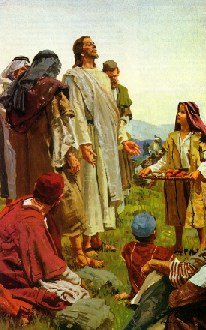
"he will teach you all things"

We're leading worship this Sunday and plan to use this reading (and discuss it afterwards):

"Behold, the days are coming, says the LORD, when I will make a new covenant
with the house of Israel and the house of Judah,
not like the covenant which I made with their fathers
when I took them by the hand to bring them out of the land of Egypt,
my covenant which they broke, though I was their husband,
says the LORD.

"But this is the covenant which I will make
with the house of Israel after those days, says the LORD:
I will put my law within them, and I will write it upon their hearts;
and I will be their God, and they shall be my people.

"I will pray the Father,
and he will give you another Counselor,
to be with you for ever,
even the Spirit of truth...
he will teach you all things,
and bring to your remembrance all that I have said to you."

"And no longer shall each man teach his neighbor
and each his brother, saying, 'Know the LORD,'
for they shall all know me, from the least of them to the greatest,
says the LORD."

The anointing which you received from him abides in you,
and you have no need that any one should teach you;
as his anointing teaches you about everything, and is true...
just as it has taught you, abide in him.

(Jer 31.31-34; Jn 14.16-17,26; 1 Jn 2.27)

Also, before communion, we're going to play the Agnus Dei by the psalters ( hear it here). The lyrics (in Latin) mean:
Lamb of God, you take away the sins of the world, have mercy on us Lamb of God, you take away the sins of the world, have mercy on us Lamb of God, you take away the sins of the world, grant us peace.

5.30.2009

5.29.2009

come to me, all ye who labor for a living (part 3)

Continuing the essay on work...


Jesus' teaching and practice of working (and giving) without asking anything in return has significant implications. For instance, it makes our work and the things we produce more available to the needy. If we are not working for repayment, then our services are not limited to those who can afford our fees. Then need, rather than ability to pay, becomes the decisive factor and the poor and vulnerable are favored rather than the rich. We begin to respond to the needy as God does.

This is further emphasized when we recall that Jesus recommended the same free giving of our possessions as well. Jesus' ideal was stated clearly to the rich young man: "If you would be perfect, go, sell what you possess and give to the poor, and you will have treasure in heaven; and come, follow me." (Mt 19.21) And in other places, the same radical giving is preached more broadly to his followers:

"Fear not, little flock, for it is your Father's good pleasure to give you the kingdom. Sell your possessions, and give alms; provide yourselves with purses that do not grow old, with a treasure in the heavens that does not fail, where no thief approaches and no moth destroys." (Lk 12.32-33)
So, in addition to making our services equally available (or even more available to the needy), Jesus' free giving also makes resources available to all. Instead of savings and investments and property lines that keep resources in the hands of the wealthy and powerful, Jesus' free giving puts resources into the hands of the poor.

This has a leveling effect, reducing the painful separation between the rich and poor, making both resources and services available to the most needy. This is loving and just. But, as was seen in Jesus' life, this effect is not accomplished by somehow making everyone rich. Instead, we see the expected result of such generous giving: Jesus and his disciples become poor with the poor. As he warned a prospective follower, "Foxes have holes, and birds of the air have nests; but the Son of man has nowhere to lay his head." (Mt 8.20) In this we see Jesus responding to the needs of the most vulnerable, and in doing so becoming equally vulnerable himself.

The result of this is a mutual giving and receiving of gifts. Jesus preached and practiced a radical giving of resources and work freely to those in need, which resulted in his own neediness. Yet Jesus embraced this neediness, trusting God. And happily accepted the gifts of those who choose to follow his example and give freely to him and his disciples. There are many stories of him eating at the tables of others and staying at their houses, and when he sent out his disciples he specifically instructed them to accept gifts (for their needs) in the same way. Needs were met by free giving and receiving, not demanded by deals or contracts or legal rights but motivated by mutual love.

If we follow Jesus in this, we find ourselves in a revolutionary situation, a true "gift economy." All the work we do and everything we create is done in love as a gift for someone. And everything we receive comes as a gift of love from someone. It is not just an exchange of goods. Every "economic" interaction is now an act of love, with immense spiritual value.

Through Jesus' radical giving, work and resources become a way to draw people together rather than a source of contention. Those who follow him are drawn together in love and mutual vulnerability, in childlike dependence that looks to God in faith and is content to give all and remain poor. Poor, but richly provided for by the Father who loves us.

When I have described this to Christians, many have said, "That's how we will live in heaven, but down here in this fallen world...." I believe they are right about heaven. This is quite clearly the way of the kingdom of God. But Jesus offered the life of the kingdom of God to us now, if we will only believe and follow him. It may seem impossible, but with God nothing is impossible, and the life of Jesus and his disciples (and the lives of many of his followers throughout history) show us that God can make it a reality for us now.

In Psalm 95, recalling the Exodus, we hear about the people of Israel when God was trying to deliver them from slavery into freedom, and they did not trust the promises of God to provide for them. God speaks through the psalmist:
Harden not your hearts, as at Meribah,
as on the day at Massah in the wilderness,
when your fathers tested me,
they tried me, though they had seen my work.

For forty years I was wearied of that generation
and said, "Their hearts are astray,
these people do not know my ways."
Therefore I swore in my anger
that they should not enter my rest.
And they wandered for the rest of their lives, trudging through the desert. Now, in our own desert (of "this fallen world"), we hear Jesus' words:
"Come to me, all who labor and are heavy laden, and I will give you rest. Take my yoke upon you, and learn from me; for I am gentle and lowly in heart, and you will find rest for your souls. For my yoke is easy, and my burden is light." (Mt 11.28-30)
This invitation is offered to each of us.

So which way will we choose?


(The full essay is available for download as a RTF file here.)

5.27.2009

come to me, all ye who labor for a living (part 2)

Continued from yesterday...


Jesus knew the vulnerability of human life, the daily need for food and shelter to survive. And he knew the anxiety that can overwhelm us in this need. Yet he did not respond in the usual way, by working hard (and harder and harder) to gather up for ourselves what we need and storing as much as we can for the future. Instead, Jesus responded with faith.

Faith is giving up our own will, our own purposes, to God and depending on him completely for our good. And this is exactly what we see when Jesus talks about our daily needs:
“I tell you, do not be anxious about your life, what you shall eat, nor about your body, what you shall put on. For life is more than food, and the body more than clothing.

"Consider the ravens: they neither sow nor reap, they have neither storehouse nor barn, and yet God feeds them. Of how much more value are you than the birds!

"…Consider the lilies, how they grow; they neither toil nor spin; yet I tell you, even Solomon in all his glory was not arrayed like one of these. But if God so clothes the grass which is alive today and tomorrow is thrown into the oven, how much more will he clothe you, O men of little faith!” (Lk 12.22-24)
Jesus taught that we should set aside concerns for our own physical needs (O we of little faith!) and trust God to supply them, because “your Father knows that you need them.” And not only did he assure us that we would have what we needed, but he also described the life of faith as beautiful, like that of the birds that are fed without storehouses and the lilies that are beautifully dressed without toil. Strikingly similar to the happy life of children well cared for.

Jesus also demonstrated such a life of faith. In what we know of his public life, his needs—as well as the needs of his disciples—were met without laboring for their own daily bread. And when Jesus sent out his disciples, he very specifically instructed them not to take provisions but to trust God to provide through those they met. Later, near the end of his ministry, Jesus asked his disciples, “When I sent you out with no purse or bag or sandals, did you lack anything?” They answered, “Nothing.” (Lk 22.35)

Jesus seemed to embrace the vulnerability of daily physical needs. Rather than seeing it as a source of anxiety or the driving force for endless work and hoarding, he seemed to see it as an opportunity for faith. Our vulnerability, like that of the birds and lilies, is part of God´s creation. And for us it provides the opportunity to freely and joyfully rely on God´s provision rather than struggling to provide for ourselves and fighting to keep what we have gathered. This is the ongoing act of faith. Which God responds to not only by providing for our physical needs, but more importantly by drawing us closer to him, where we experience the fulfillment and joy of total love. Thus our humble physical vulnerability becomes the opportunity to address our deeper problem of separation from God, and experience deeper union with God through our response to the daily needs that arise.

Also, as we see in Jesus' life, our needs provide an opportunity to encourage others to respond in faith also. Our faith (and God´s provision) shows the way to faith for others. That those struggling around us might also know God´s care and presence.

But this doesn´t mean Jesus didn´t work, or taught others to avoid work. What he did was offer us freedom from anxiety so we could be free do the work God calls us to, rather than working for money, or to provide for our own needs. After describing the life of the birds and lilies, Jesus continued:
"Do not seek what you are to eat and what you are to drink, nor be of anxious mind. For all the nations of the world seek these things; and your Father knows that you need them. Instead, seek his kingdom, and these things shall be yours as well.

"Fear not, little flock, for it is your Father's good pleasure to give you the kingdom..." (Lk 12.29-32)
Elsewhere he said, "Do not labor for the food which perishes, but for the food which endures to eternal life, which the Son of man will give to you..." (Jn 6.27) We were being invited into the life of God's kingdom, where we would be free to work for others, guided by God's love and God's purposes, rather than working for ourselves.

And the work of the kingdom was to be given as a gift to people. Instead of work being a slavery, the part of our lives we must sell to “pay our own way,” the work Jesus encouraged was to be a free gift of love. Perhaps the best summary of this appeared when Jesus sent out his disciples to preach and heal, telling them, “You received without paying, give without pay.” (Mt 10.8) Their needs were going to be met by God (through others) as a gift, God´s love responding to their vulnerability. And all their talents and abilities and wisdom were also gifts from God, along with the energy they had and the motivation of love to use those abilities for the good of others. All gifts. So they were told to offer their work as a gift to others, without pay.

Not just their "volunteer" work, either, their work in their spare time (after the "work day" is over). But all their work. They were to make their whole lives a gift.

This was how Jesus himself worked. He used the abilities God had given him to serve those around him, and he asked nothing in return. (He did, though, accept the gifts that others freely chose to give to him). And he taught his followers to do the same, such as in these passages:
He said to the man who had invited him, “When you give a dinner or a banquet, do not invite your friends or your brothers or your kinsmen or rich neighbors, lest they also invite you in return, and you be repaid. But when you give a feast, invite the poor, the maimed, the lame, the blind, and you will be blessed, because they cannot repay you. You will be repaid at the resurrection of the just.” (Lk 14.12-14)

“If you do good to those who do good to you, what credit is that to you? For even sinners do the same. And if you lend to those from whom you hope to receive, what credit is that to you? Even sinners lend to sinners, to receive as much again. But love your enemies, and do good, and lend, expecting nothing in return; and your reward will be great…” (Lk 6.33-35)
Together with “give without pay” and Jesus' own example, these provide a consistent model for our work. God´s provision for us allows us to give our service freely to others without asking for payment. Instead of working to provide our own "living," we are offered life—as a gift—so we can offer our lives to others as a gift. And this frees our work. No longer do we need to be driven by our own needs or have to do the kind of work “that sells”; no longer do we need to serve first those who have the money to pay. We are freed to do the kind of work that God has created us for, the work God calls us to, motivated only by love for those we are serving.

"Come to me, all ye who labor for a living, and I will give you rest"—and freedom.


continued...

5.26.2009

come to me, all ye who labor for a living

I just sent this article (the first of three) to Jesus Manifesto. The series will be about work and giving freely, a topic I've written about much before, though not much lately. Recent conversations have encouraged me to start talking about this again:


"Come to me, all who labor and are heavy laden, and I will give you rest. Take my yoke upon you, and learn from me; for I am gentle and lowly in heart, and you will find rest for your souls. For my yoke is easy, and my burden is light." (Mt 11.28-30)

These words of Jesus resonate powerfully with those of us who feel burdened by labor. For those driven by our needs and hungers and vulnerability to work long hours under heavy strain to provide food and shelter and medical care. And now, as our economy struggles, the weight seems so much heavier for so many. In times like these, Jesus' words sound good, so very good. Even too good to be true.

Which is perhaps the reason they are usually dismissed as an ideal, or spiritualized in a way that offers no real rest to the physically weary. But this is not as it should be.

Jesus' words here, along with his other teachings related to work and money, offer us true rest for soul and body. Jesus offers us a restoration of work, as it was meant to be when God formed human beings, work as a satisfying fulfillment of our creation. Work that we want to do, that we do for joy, in obedience to our unique nature given by God. Work that is not a burden, but a relief, a rest for our souls.

In offering this, however, Jesus also radically challenges the way we currently work in our world. He offers us rest and the true meaning and satisfaction of work, but in order to receive this we must follow his example, leaving behind the means and purposes and rewards of labor in our society. We must lay down the yoke we have fit ourselves to, lay it down, and take his yoke, learning from him. It is a lowly yoke, one that perhaps seems flimsy to us. But it is much, much lighter.

Our understanding of work in our world is so much tied to money that the word "work" has become synonymous with "a job." Which is to say, work for us primarily means labor that we are paid to do. We make this connection automatically, yet of course work, in the truest and best sense of the word, does not mean "what we do to make money." It means exerting physical or mental effort to build something useful, or create something beautiful, or serve someone in need. Money, or personal profit of any kind, need not have any part of it. When we think of work primarily as "for money" we show how deeply we have been conditioned by our society, how ready we have been made to sell ourselves.

We also automatically connect work with "providing for ourselves." Everyone has needs and everyone is expected to labor to acquire the goods necessary to meet our own needs and the needs of our own families. For this reason, "hard workers" are admired and honored by all. And, to the extent that our work is productive and useful to others, we can usually expect to be rewarded with material wealth, seen as the source of physical security for the future. We are taught that hard work is the answer to our vulnerability and need, and that hard work will be richly rewarded.

But these lessons, deeply woven into the fabric of our society, also lead us into lives burdened with continual mental stress and physical exhaustion. We measure the worth of our work by its (ever changing) price tag. We struggle to continually satisfy the boss or the customer, the person with the money always being the one we must please. We feel driven by our uncertain needs (and our uncertain economy) to work harder and harder and harder. And, if we are successful and gather some measure of wealth to provide for our future, we become targets. Targets for merchants or servants who charge us excessively for needed services we haven´t the time or the skills to do for ourselves, targets for politicians who tax us heavily, targets for thieves who see what we have and want it for themselves. And with the natural erosion of our property (and sometimes the unnatural erosion of the economic markets), we watch as our hard-earned money continues to turn to dust, requiring us to work harder and longer.

To us, facing these challenges, Jesus says, "Come to me, all you who labor and are heavy laden, and I will give you rest."

But he also says:
"Do not lay up for yourselves treasures on earth, where moth and rust consume and where thieves break in and steal, but lay up for yourselves treasures in heaven, where neither moth nor rust consumes and where thieves do not break in and steal. For where your treasure is, there will your heart be also." (Mt 6.19-21)

"And do not seek what you are to eat and what you are to drink, nor be of anxious mind. For all the nations seek these things; and your Father knows that you need them. Instead, seek God´s kingdom and these things shall be yours as well." (Lk 12.27-31)

"Do not labor for the food which perishes, but for the food which endures to eternal life, which the Son of man will give to you…" (Jn 6.27)
We cannot receive the rest Jesus offers without coming to him, following him, which includes following his harder teachings like these. But how can we do it, in the society we live in? With the many needs we have, and all the people around us—the people we depend on for help—always demanding pay, pay, pay?

How can we lay down the yoke that has been strapped securely on us—how can we possibly afford to?


continued...

5.24.2009

for memorial day

The Unknown Citizen

(To JS/07/M/378 This Marble Monument Is Erected by the State)

He was found by the Bureau of Statistics to be
One against whom there was no official complaint,
And all the reports on his conduct agree
That, in the modern sense of an old-fashioned word, he was a saint,
For in everything he did he served the Greater Community.
Except for the War till the day he retired
He worked in a factory and never got fired,
But satisfied his employers, Fudge Motors, Inc.
Yet he wasn't a scab or odd in his views,
For his Union reports that he paid his dues,
(Our report on his Union shows it was sound)
And our Social Psychology workers found
That he was popular with his mates and liked a drink.
The Press are convinced that he bought a paper every day
And that his reactions to advertisements were normal in every way.
Policies taken out in his name prove that he was fully insured,
And his Health-card shows he was once in hospital but left it cured.
Both Producers Research and High-Grade Living declares
He was fully sensible to the advantages of the Installment Plan
And he had everything necessary to the Modern Man,
A phonograph, a radio, a car and a frigidaire.
Our researchers into Public Opinion are content
That he held the proper opinions for the time of year;
When there was peace, he was for peace; when there was war, he went.
He was married and added five children to the population,
Which our Eugenist says was the right number for a parent of his generation,
And our teachers report that he never interfered with their education.

Was he free? Was he happy? The question is absurd:
Had anything been wrong, we should certainly have heard.


—W.H. Auden

5.22.2009

the I in team


5.20.2009

remembering a turning point

In a discussion today on Jesus Manifesto, I referred to an old journal entry from my time at the Catholic Worker: "not a one-man soup kitchen" It was good to go back and read that; it was a significant turning point in my path, opening up something unexpected and very good.

Here it is:

"Thou didst reject the one infallible banner which was offered Thee to make all men bow down to Thee alone—the banner of earthly bread; and Thou hast rejected it for the sake of freedom and the bread of Heaven."
That's Dostoyevsky's Grand Inquisitor talking to Jesus (that I quoted a couple weeks ago). And I think the story in John 6 says something similar. It begins:
There was much grass in the place; so the men sat down, in number about five thousand. Jesus then took the loaves, and when he had given thanks, he distributed them to those who were seated; so also the fish, as much as they wanted.

...On the next day boats from Tiberias came near the place where they ate the bread after the Lord had given thanks. So when the people saw that Jesus was not there, nor his disciples, they themselves got into the boats and went to Capernaum, seeking Jesus. And when they found him on the other side of the sea, they said to him, "Rabbi, when did you come here?"

Jesus answered them, "Truly, truly, I say to you, you seek me, not because you saw signs, but because you ate your fill of the loaves. Do not labor for the food which perishes, but for the food which endures to eternal life, which the Son of man will give to you..."
Jesus is bothered that they just come back for the food. He cared about their hunger, and he provided for their need very generously, but he does not want to become a one-man soup kitchen. He meant the food as a sign, not just another meal. And he's not willing to provide more food for those who are just seeking that. He rejects the "one infallible banner" of bread, for which the people will gladly come again and again. And here again, as with the devil, his response is that "man does not live by bread alone, but by every word that comes from God":
They said to him, "Then what sign do you do, that we may see, and believe you? What work do you perform? Our fathers ate the manna in the wilderness; as it is written, `He gave them bread from heaven to eat.'"

Jesus then said to them, "Truly, truly, I say to you, it was not Moses who gave you the bread from heaven; my Father gives you the true bread from heaven. For the bread of God is that which comes down from heaven, and gives life to the world."

They said to him, "Lord, give us this bread always."

Jesus said to them, "I am the bread of life; he who comes to me shall not hunger, and he who believes in me shall never thirst. ...This is the bread which came down from heaven, not such as the fathers ate and died; he who eats this bread will live for ever." This he said in the synagogue, as he taught at Capernaum.

Many of his disciples, when they heard it, said, "This is a hard saying; who can listen to it?" ...After this many of his disciples drew back and no longer went about with him.

I'm not sure what this says about the work here (a work people readily understand and honor and support). But it does seem to fit with my growing dissatisfaction with the pressures and demands to "provide services." The constant flow of people just wanting food or shelter or money. And coming here because it's a soup kitchen and shelter, which are not about inspiring faith (or requiring faith of those who come, as Jesus did) but about putting food on the table.

Are we taking up the "infallible banner" that Jesus rejected?

I do still think it's possible to love people here in a Christlike way, provide "signs" of God's love, and I plan to continue to try to do that (and learn to do it better). But I also think the soup kitchen model is lacking, and I feel the need to look beyond it.

5.17.2009

farm newsletter

Still having posting issues, but I think I figured a way to do everything I want via e-mail. I found out you can compose any html message with pictures, etc, in a WYSIWYG editor and paste it into an e-mail (even if the e-mail, like Yahoo, doesn't allow html editing).

Anyway, here's the farm newsletter I just finished and am getting ready to mail. The first article is by our friend Tatiana. Click here to download the newsletter as a pdf file.

5.15.2009

economic indicator

Still can't post (in the normal way). So I'm trying something else today, something appropriate for our current tough economy...